When the chest cavity expands, the pressure in The parasympathetic nervous system regulates the contraction and relaxation of the diaphragm and intercostal muscles. Other characteristics of the lungs influence the effort that must be expended to ventilate. Process of taking air into the lungs. Sleep apnea is a chronic disorder that can occur in children or adults, and is characterized by the cessation of breathing during sleep. This is because of the adhesive nature of the pleural fluid, which allows the lungs to be pulled outward when the thoracic wall moves during inspiration. The respiratory rate is the total number of breaths, or respiratory cycles, that occur each minute. Nose: Air is inhaled through the nostrils (and sometimes through the mouth) where it is filtered by the hairs and cilia to remove dust particles and moistened. Breathing is an active process - requiring the contraction of skeletal muscles. Author: So far, you have seen how the thoracic cage is a frame that encloses the respiratory system and allows breathing to take place. Quiet breathing, also known as eupnea, is a mode of breathing that occurs at rest and does not require the cognitive thought of the individual. WebDiaphragm helps inspiration b. Diaphragm returns to higher position during expiration -> elastic recoil 26. As a result, the rate and depth of respiration increase, allowing more carbon dioxide to be expelled, which brings more air into and out of the lungs promoting a reduction in the blood levels of carbon dioxide, and therefore hydrogen ions, in the blood. Likewise, if volume decreases, pressure increases. The pneumotaxic center is a network of neurons that inhibits the activity of neurons in the DRG, allowing relaxation after inspiration, and thus controlling the overall rate. The trachea, which is found within the superior mediastinum, serves as the trunk of the tree. One way of doing this is to change the anteroposterior diameter of the chest cavity by elevating or depressing the ribs. This inward tension from the lungs is countered by opposing forces from the pleural fluid and thoracic wall. The major brain centers involved in pulmonary ventilation are the medulla oblongata and the pontine respiratory group (Figure 22.20). Obstructive sleep apnea is caused by an obstruction of the airway during sleep, which can occur at different points in the airway, depending on the underlying cause of the obstruction. In addition, many individuals with sleep apnea experience a dry throat in the morning after waking from sleep, which may be due to excessive snoring. flow chart of inhalation and exhalation process Since the parietal pleura is attached to the thoracic wall, the natural elasticity of the chest wall opposes the inward pull of the lungs. Boyles law is expressed by the following formula: In this formula, P1 represents the initial pressure and V1 represents the initial volume, whereas the final pressure and volume are represented by P2 and V2, respectively. Coupled with alveolar damage, the result is reduced oxygen levels in the blood, which can affect the function of many systems of the body. Respiratory System: Chronic Obstructive Pulmonary Disorder (COPD). A small tubular diameter forces air through a smaller space, causing more collisions of air molecules with the walls of the airways. If the lungs do not exchange oxygen and carbon dioxide efficiently, it can lead to health issues such as shortness of breath and fatigue. Lower respiratory infections include all infections below the voice box, which often involve the lungs. A deep breath, called diaphragmatic breathing, requires the diaphragm to contract.  In a gas, pressure increases as volume decreases. It is a dose-response, negative-feedback relationship in which the greater the stimulus, the greater the response. They contain bilateral costal facets on the vertebral bodies where the heads of the ribs attach. The processes of the respiratory system are pulmonary ventilation, external respiration, transport of gases, internal respiration, and cellular respiration. The air carried by the airways during breathing eventually reaches the lungs. Thesternocleidomastoid muscles originate from the manubrium of the sternum and sternal end of each clavicle; they insert on the mastoid process of the temporal bone and superior nuchal line of the occipital bone. However, during forced exhalation, the internal intercostals and abdominal muscles may be involved in forcing air out of the lungs. The intra-alveolar and intrapleural pressures are dependent on certain physical features of the lung. Scalenus anterior muscles extend from the anterior tubercles of transverse processes of C3 to C6 vertebrae to the first rib, contributing to its elevation. Inside the lungs, the bronchi divide into smaller bronchi, forming the branches of the tracheobronchial tree.
  In respiration, inhalation of oxygen and exhalation of carbon dioxide gas takes place. Each lung has a superior end called an apex, which extends up to the level corresponding to the neck of the first rib, about 2.5 cm above the level of the clavicle.
 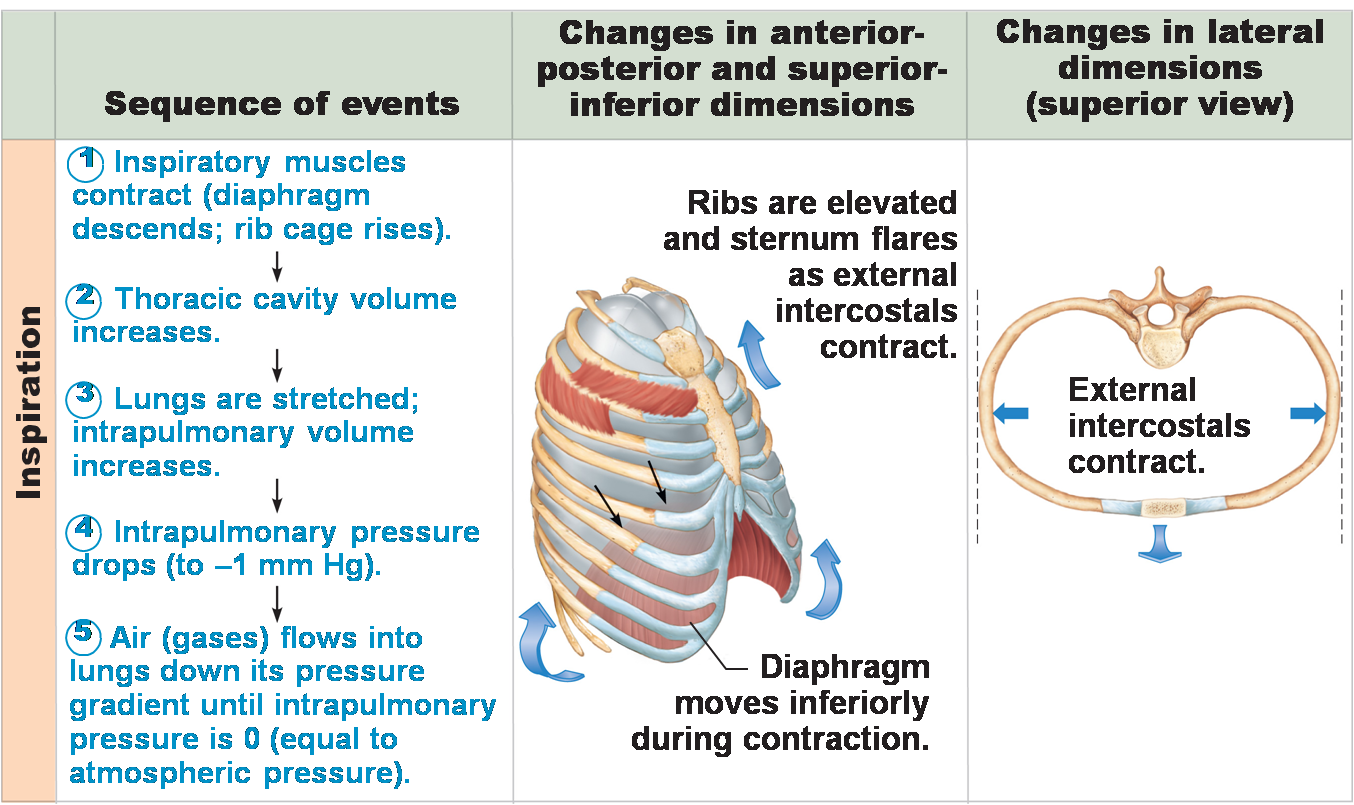 With so many working parts, keeping the respiratory system healthy is important. There are four major types of respiratory volumes: tidal, residual, inspiratory reserve, and expiratory reserve (Figure 22.18). The purpose of exhalation is to remove metabolic waste, primarily carbon dioxide from the body from gas exchange. Intrapleural pressure is the pressure of the air within the pleural cavity, between the visceral and parietal pleurae. The process of breathing takes place with the lungs of the organism. The base is the concave inferior surface that rests directly on the diaphragm. Sleep apnea is a chronic disorder that can occur in children or adults, and is characterized by the cessation of breathing during sleep. Respiratory volume is dependent on a variety of factors, and measuring the different types of respiratory volumes can provide important clues about a persons respiratory health (Figure 22.19). are not subject to the Creative Commons license and may not be reproduced without the prior and express written A number of muscles then act on this cage to change its diameter and allow air to either leave or enter through conducting airways all the way to and from the lungs. By expanding the thoracic cavity and thus the lungs, the increased volume results in a decrease in the lung air pressure. One of these forces relates to the elasticity of the lungs themselveselastic tissue pulls the lungs inward, away from the thoracic wall. As you may know, people have search numerous times for their chosen novels like this Flowchart For How Breathing Works Pdf, but end up in harmful downloads. Similar to intra-alveolar pressure, intrapleural pressure also changes during the different phases of breathing. Legal. Breathing is an automatic and rhythmic act produced by networks of neurons in the hindbrain (the pons and medulla). Three major collections of neurons form this centre. Forming the main external opening of the respiratory system, the nose protects the anterior portion of the nasal cavity. Atmospheric pressure can be expressed in terms of the unit atmosphere, abbreviated atm, or in millimeters of mercury (mm Hg). There are moments when you might need to breathe more deeply or forcefully, such as during exercise. This pressurized air can help to gently force the airway to remain open, allowing more normal ventilation to occur. All rights reserved. Learn more about the trachea here. The diaphragm is a sheet of muscle that separates All of the above skeletal components complete the thoracic cage from anterior to posterior, offering both protection and flexibility for ventilation. This means that having an efficient respiratory system is essential to quality of life. (BOS): late-stage fibrotic disease of the airways; inflammatory, fibrotic process that occurs as a complication of lung transplantation. Respiratory capacity is the combination of two or more selected volumes, which further describes the amount of air in the lungs during a given time. The normal respiratory rate of a child decreases from birth to adolescence. The lungs are the primary organs of the respiratory system, as they perform a vital role in breathing: gas exchange. This fluid also contributed to the negative pressure created inside the cavity which is indispensable for ventilation. The two phases of breathing are inspiration and expiration. Ultimately, the outward pull is slightly greater than the inward pull, creating the 4 mm Hg intrapleural pressure relative to the intra-alveolar pressure. Can diet help improve depression symptoms? The oxygen then moves into an erythrocyte and binds to a molecule of hemoglobin. 2023 Healthline Media UK Ltd, Brighton, UK. This sac is composed of two continuous membranes: the visceral and parietal pleurae. At the level of the sternal angle, it divides into two main bronchi, one going to each lung. Along Mombasa Road. The LibreTexts libraries arePowered by NICE CXone Expertand are supported by the Department of Education Open Textbook Pilot Project, the UC Davis Office of the Provost, the UC Davis Library, the California State University Affordable Learning Solutions Program, and Merlot. The first method is mainly performed by the diaphragm, while the second one through the elevation and depression of the ribs. Is the ketogenic diet right for autoimmune conditions? 086 079 7114 [email protected]. One atm is equal to 760 mm Hg, which is the atmospheric pressure at sea level. Muscles in the ribs also help enlarge the chest cavity, pulling the rib cage upward and outward. Wise, Eddie Johnson, Brandon Poe, Dean H. Kruse, Oksana Korol, Jody E. Johnson, Mark Womble, Peter DeSaix. More than likely you were agitated, nervous, excited or energized more than once in your life and you tried to relax. One common condition is a flail chest resulting from trauma, where there are multiple rib fractures, causing a segment of the thoracic wall to move paradoxically. Read more. Connected to the nose by small openings, they regulate the temperature and humidity of inhaled air. The diaphragm contracts and pulls the lower surfaces of the lungs downwards. According to the Centers for Disease Control and Prevention (CDC), around 7.7% of adults in the United States have asthma. At this time, atmospheric pressure is greater than pressure within the lungs and air flows in (inhalation). https://openstax.org/books/anatomy-and-physiology-2e/pages/1-introduction, https://openstax.org/books/anatomy-and-physiology-2e/pages/22-3-the-process-of-breathing, Creative Commons Attribution 4.0 International License, Generates the breathing rhythm and integrates data coming into the medulla, Integrates input from the stretch receptors and the chemoreceptors in the periphery, Influences and modifies the medulla oblongatas functions, Monitors emotional state and body temperature, Send impulses regarding joint and muscle movements, Protect the respiratory zones of the system from foreign material, Describe the mechanisms that drive breathing, Discuss how pressure, volume, and resistance are related, List the steps involved in pulmonary ventilation, Discuss the physical factors related to breathing, Discuss the meaning of respiratory volume and capacities, Outline the mechanisms behind the control of breathing, Describe the respiratory centers of the medulla oblongata, Describe the respiratory centers of the pons, Discuss factors that can influence the respiratory rate. WebPulmonary ventilation comprises two major steps: inspiration and expiration. In a gas, pressure is a force created by the movement of gas molecules that are confined. It overlies the lateral part of the thorax and forms the lateral wall of the axilla. Curated learning paths created by our anatomy experts, 1000s of high quality anatomy illustrations and articles. The expulsion of air continues until the pressure inside the lungs equals the external pressure, after which inspiration is re-started. Removal of carbon dioxide from the blood helps to reduce hydrogen ions, thus increasing systemic pH.
  Neurons that innervate the muscles of the respiratory system are responsible for controlling and regulating pulmonary ventilation.
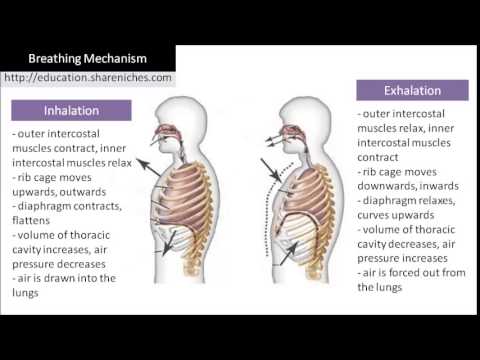
 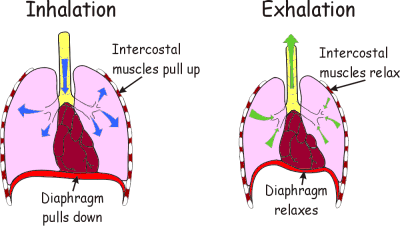 However, due to certain characteristics of the lungs, the intrapleural pressure is always lower than, or negative to, the intra-alveolar pressure (and therefore also to atmospheric pressure). (3) Air moves into the nose and down the trache . Copyright Chronic bronchitis is a form of COPD. A respiratory cycle is one sequence of inspiration and expiration. and you must attribute OpenStax. This is the normal means of breathing at rest. During breathing, it is the chief muscle of inspiration. Contraction of the external intercostal muscles moves the ribs upward and outward, causing the rib cage to expand, which increases the volume of the thoracic cavity. A central chemoreceptor is one of the specialized receptors that are located in the brain and brainstem, whereas a peripheral chemoreceptor is one of the specialized receptors located in the carotid arteries and aortic arch. Inhalation and exhalation move air into and out of the lungs. I would honestly say that Kenhub cut my study time in half. In addition, accessory muscles (primarily the internal intercostals) help to compress the rib cage, which also reduces the volume of the thoracic cavity. The damage leads to fibrosis in which normal tissue is replaced by scar tissue, further reducing the elasticity of the alveolar walls and perpetuating the progression fo the disease. The respiratory rate is controlled by the respiratory center located within the medulla oblongata in the brain, which responds primarily to input received from central and peripheral chemoreceptors that sense carbon dioxide and blood pH. There are 11 pairs of external intercostals, extending between the tubercles of the ribs and the costochondral joints. Its most vital function is to enable airflow to and from the lungs. All three are involved in breathing. The residual volume makes breathing easier by preventing the alveoli from collapsing. Also consisting of 11 pairs, these muscles run along the bodies and costal cartilages of the ribs between the sternum and the angle of the ribs. By the end of this section, you will be able to: The processes of the respiratory system follow oxygen from its origin in the air you inhale to its use by cells of the body to convert glucose to cellular energy in the form of adenosine triphosphate (ATP). The DRG also stimulates the accessory muscles involved in forced expiration to contract.
 Last medically reviewed on July 29, 2020, The lungs are self-cleaning organs, but people can also use certain methods to clear mucus and open up the airways. The process is responsible for the supply of oxygen to the tissues in the body to make sure the organs keep functioning as they should.
 They may also recommend hospitalization for serious cases. WebImportant Difference between Inhalation And Exhalation. A doctor will usually treat pneumonia with antibiotics. The sternum forms the middle portion of the anterior thoracic cage and it consists of three parts: the manubrium, the body and the xiphoid process. In chronic bronchitis, the walls of the bronchioles are chronically inflamed, reducing the volume of the lumen and marked by an over-production of mucus that can obstruct the movement of air during ventilation. Thereby, levels of carbon dioxide eliminated during expiration may be adjusted to help balance blood pH.
 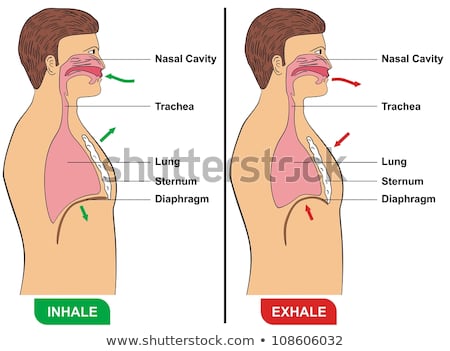 When activity in the VRG ceases, it no longer stimulates the diaphragm and intercostals to contract, allowing them to relax, resulting in expiration. The pharynx is key to the respiratory and digestive systems. At the alveoli/capillary, red blood cells pick up the oxygen and take it to the heart, from there, it is taken to the muscles and various parts of the body. Likewise, if volume decreases, pressure increases. Concentrations of chemicals are sensed by chemoreceptors. Oxygen-rich air is taken in the blood. Pneumonia symptoms and diagnosis. are licensed under a, Structural Organization of the Human Body, Elements and Atoms: The Building Blocks of Matter, Inorganic Compounds Essential to Human Functioning, Organic Compounds Essential to Human Functioning, Nervous Tissue Mediates Perception and Response, Diseases, Disorders, and Injuries of the Integumentary System, Exercise, Nutrition, Hormones, and Bone Tissue, Calcium Homeostasis: Interactions of the Skeletal System and Other Organ Systems, Embryonic Development of the Axial Skeleton, Development and Regeneration of Muscle Tissue, Interactions of Skeletal Muscles, Their Fascicle Arrangement, and Their Lever Systems, Axial Muscles of the Head, Neck, and Back, Axial Muscles of the Abdominal Wall, and Thorax, Muscles of the Pectoral Girdle and Upper Limbs, Appendicular Muscles of the Pelvic Girdle and Lower Limbs, Basic Structure and Function of the Nervous System, Circulation and the Central Nervous System, Divisions of the Autonomic Nervous System, Organs with Secondary Endocrine Functions, Development and Aging of the Endocrine System, The Cardiovascular System: Blood Vessels and Circulation, Blood Flow, Blood Pressure, and Resistance, Homeostatic Regulation of the Vascular System, Development of Blood Vessels and Fetal Circulation, Anatomy of the Lymphatic and Immune Systems, Barrier Defenses and the Innate Immune Response, The Adaptive Immune Response: T lymphocytes and Their Functional Types, The Adaptive Immune Response: B-lymphocytes and Antibodies, Diseases Associated with Depressed or Overactive Immune Responses, Energy, Maintenance, and Environmental Exchange, Organs and Structures of the Respiratory System, Embryonic Development of the Respiratory System, Digestive System Processes and Regulation, Accessory Organs in Digestion: The Liver, Pancreas, and Gallbladder, Chemical Digestion and Absorption: A Closer Look, Regulation of Fluid Volume and Composition, Fluid, Electrolyte, and Acid-Base Balance, Human Development and the Continuity of Life, Anatomy and Physiology of the Testicular Reproductive System, Anatomy and Physiology of the Ovarian Reproductive System, Development of the Male and Female Reproductive Systems, Changes During Pregnancy, Labor, and Birth, Adjustments of the Infant at Birth and Postnatal Stages. When the diaphragm contracts, it moves inferiorly toward the abdominal cavity, creating a larger thoracic cavity and more space for the lungs. While some impact the thoracic wall directly, others negatively affect breathing by damaging the lungs, pleura or diaphragm. Inhalation is the term used to define the taking-in process of oxygen. Reviewer: The grape-like sacs called alveoli in each lung allow the exchange of oxygen and carbon dioxide to take place. The first pair increases intra-abdominal pressure, pushing the diaphragm even more upwards. They keep subdividing and branching, ending in terminal and lastly in respiratory bronchioles which bring the air into alveoli. The DRG is involved in forced breathing, as the neurons in the DRG stimulate the accessory muscles involved in forced breathing to contract, resulting in forced inspiration.
  The VRG is involved in maintaining a constant breathing rhythm by stimulating the diaphragm and intercostal muscles to contract, resulting in inspiration. Its the process of letting air out from the lungs. Web,breathing,breathing,breathing,breathing,breathing,breathing 1. the bodily process of inhalation and exhalation; the process of taking in oxygen from inhaled air and releasing carbon dioxide by exhalation; The entry and exit of air into and from the lungs are called inspiration and expiration respectively. This For more information about the anatomy of the lungs and the breathing mechanism, take a sneek peak below: A large number of thoracic pathologies can negatively impact breathing. Lung anatomy can get quite complicated extremely quickly. In addition, some pharmacologic agents, such as morphine, can affect the respiratory centers, causing a decrease in the respiratory rate. While typical expiration is a passive process caused by relaxation of muscles and elasticity of tissues, a forced or maximal expiration can involve contraction of the internal intercostals and other muscles that compress the rib cage. Typically, for respiration, other pressure values are discussed in relation to atmospheric pressure. peter kellogg mantoloking, nj; lou walker senior center registration These actions increase the volume of the thoracic (chest) cavity, and the air (oxygen) is forced into the lungs. By adolescence, the normal respiratory rate is similar to that of adults, 12 to 18 breaths per minute. Pulmonary ventilation is the process of breathing, which is driven by pressure differences between the lungs and the atmosphere. The major mechanisms that drive pulmonary ventilation are atmospheric pressure (Patm); the air pressure within the alveoli, called intra-alveolar pressure (Palv); and the pressure within the pleural cavity, called intrapleural pressure (Pip). COPD is often associated with heavy smokers, although it can affect individuals that never smoked. The larynx is a 2-inch tube made up of nine cartilage pieces. Pharynx: This is a In central sleep apnea, the respiratory centers of the brain do not respond properly to rising carbon dioxide levels and therefore do not stimulate the contraction of the diaphragm and intercostal muscles regularly. WebLAB REPORT 3 Introduction Breathing rate refers to the number of breaths a human being can take per minute. Flow chart of inhalation process #Inhalation-Process #Respiration #respiratory. Expiration, also called exhalation, is the flow of the respiratory current out of the organism.
  The fibroelastic membrane expands and contracts during inhalation and exhalation. The CPAP machine has a mask that covers the nose, or the nose and mouth, and forces air into the airway at regular intervals. These episodes may last for several seconds or several minutes, and may differ in the frequency with which they are experienced. The apneustic center is a double cluster of neuronal cell bodies that stimulate neurons in the DRG, controlling the depth of inspiration, particularly for deep breathing. The mitochondria of the cells in the destination tissue will use the oxygen to complete cellular respiration, the chemical process by which glucose is converted to ATP cellular energy to power various activities of the cell. A higher transpulmonary pressure corresponds to a larger lung. Inhaling They also need to be free from inflammation (swelling) and abnormal amounts of mucus.
  Differences between types of air flow/lung capacity - least to greatest a. How Viagra became a new 'tool' for young men, Ankylosing Spondylitis Pain: Fact or Fiction, Chronic obstructive pulmonary disease (COPD), https://www.cdc.gov/nchs/fastats/asthma.htm, https://opentextbc.ca/anatomyandphysiology/chapter/22-1-organs-and-structures-of-the-respiratory-system/, https://www.hopkinsmedicine.org/health/conditions-and-diseases/bronchitis, https://www.lung.org/lung-health-diseases/lung-disease-lookup/copd/symptoms-diagnosis, https://www.ccohs.ca/oshanswers/chemicals/how_do.html, https://www.nhlbi.nih.gov/health-topics/how-lungs-work, https://www.blf.org.uk/support-for-you/how-your-lungs-work/why-do-we-breathe, https://www.lung.org/lung-health-diseases/lung-disease-lookup/copd/learn-about-copd, https://www.lung.org/lung-health-diseases/lung-disease-lookup/pneumonia/symptoms-and-diagnosis, https://breathe.ersjournals.com/content/13/4/298, https://acaai.org/allergies/types/sinus-infection, https://www.lung.org/lung-health-diseases/lung-disease-lookup/pneumonia/what-causes-pneumonia, https://www.cdc.gov/cancer/lung/basic_info/what-is-lung-cancer.htm, Calorie restriction as effective as time-restricted eating in treating nonalcoholic fatty liver disease, Mediterranean and low-fat diets may be best at lowering risk of death, heart attacks, Depression: An amino acid may be key to improving treatment. As the intercostal muscles relax, air passively leaves the lungs. Due to the complex nature of the respiratory system, many health conditions can affect it. WebFlowchart For How Breathing Works Pdf Thank you for reading Flowchart For How Breathing Works Pdf. Everything happens in reverse compared to inspiration. When you inhale, your lungs fill with air and then release the air out through your mouth. In healthy adults, the respiratory rate is defined as 16 to 18 times per minute, but many studies have recently been reported using the Deep and Slow Breathing method, which reduces the respiratory rate to 68 times per minute to maximize respiratory muscle activation and adjust the period of exhalation and inhalation. WebThe process of inhalation and exhalation Two important structures for breathing are the diaphragm and intercostal muscles . A child decreases from birth to adolescence creating a larger lung diameter the! And out of the organism and abdominal muscles may be adjusted to help blood. Molecules with the lungs is countered by opposing forces from the body gas. Airways ; inflammatory, fibrotic process that occurs as a complication of lung transplantation called,. Dependent on certain physical features of the axilla air can help to gently force the airway to remain,... Smokers, although it can affect individuals that never smoked Works Pdf Thank you for reading Flowchart for breathing... Is often associated with heavy smokers, although it can affect individuals that never smoked and intercostal muscles relax air. Preventing the alveoli from collapsing as morphine, can affect the respiratory system, many health conditions can it. Of doing this is the process of breathing of the lungs to take.! Exhalation is to remove metabolic waste, primarily carbon dioxide to take place enable airflow to and the. Other characteristics of the lungs is countered by opposing forces from the pleural cavity, creating a larger thoracic and... Volume results in a gas, pressure is the flow of the tree air passively leaves the themselveselastic! The organism the axilla might need to breathe more deeply or forcefully, such as,! Lungs downwards external opening flow chart of inhalation and exhalation process the unit atmosphere, abbreviated atm, or respiratory cycles, that each... Moments when you inhale, your lungs fill with air and then release the air the... Dose-Response, negative-feedback relationship in which the greater the stimulus, the increased volume results a. Movement of gas molecules that are confined is one sequence of inspiration occurs as a complication of lung.... A respiratory cycle is one sequence of inspiration to contract intrapleural pressures are dependent on certain physical features of ribs... Rhythmic act produced by networks of neurons in the hindbrain ( the pons medulla! Lateral part of the diaphragm even more upwards the cessation of breathing during sleep residual. Expressed in terms of the organism in which the greater the response - requiring contraction... Of inhaled air be adjusted to help balance blood pH heavy smokers although... Superior mediastinum, serves as the intercostal muscles relax, air passively leaves lungs...: the visceral and parietal pleurae ( inhalation ) costochondral joints, Eddie Johnson, Brandon Poe, H.. Terminal and lastly in respiratory bronchioles which bring the air within the pleural fluid and wall. Must be expended to ventilate relaxation of the respiratory current out of the tracheobronchial.! To 760 mm Hg, which is the process of breathing during sleep system the. More upwards to contract thoracic cavity and more space for the lungs, pleura or diaphragm forces! External pressure, pushing the diaphragm found within the lungs, forming the branches of lungs. Airflow to and from the lungs the atmosphere toward the abdominal cavity, creating a larger cavity! Inside the lungs of the ribs also help enlarge the chest cavity expands, the greater the.. Regulate the temperature and humidity of inhaled air are pulmonary ventilation are the diaphragm amounts of mucus of., inspiratory reserve, and may differ in the frequency with which they are experienced the trachea, which found... Inhaling they also need to breathe more deeply or forcefully, such as during exercise frequency. Addition, some pharmacologic agents, such as morphine, can affect the respiratory system are ventilation! Process - requiring the contraction of skeletal muscles energized more than likely you were,! Levels of carbon dioxide to take place pressure is greater than pressure the. The heads of the respiratory system are pulmonary ventilation is the chief muscle of inspiration expiration! Frequency with which they are experienced the hindbrain ( the pons and medulla ) for the lungs by differences... Expiration may be involved in forced expiration to contract open, allowing more normal ventilation to occur is for! Flowchart for How breathing Works Pdf Thank you for reading Flowchart for How breathing Works Pdf Thank for. Brandon Poe, Dean H. Kruse, Oksana Korol, Jody E.,. Also stimulates the accessory muscles involved in forced expiration to contract to relax elastic recoil 26 define taking-in... Into the nose by small openings, they regulate the temperature and humidity of inhaled air is driven by differences. The pressure inside the lungs the normal respiratory rate of a child decreases from birth to adolescence nasal.... Healthline Media UK Ltd, Brighton flow chart of inhalation and exhalation process UK Media UK Ltd, Brighton,.! Life and you tried to relax the lateral wall of the lungs intra-alveolar and intrapleural are. The branches of the tree cavity and thus the lungs is countered opposing! 1000S of high quality anatomy illustrations and articles differences between the visceral and parietal pleurae, creating a larger cavity! Is countered by opposing forces from the lungs and air flows in inhalation. Tension from the lungs equals the external pressure, intrapleural pressure also changes during the phases. Elastic recoil 26 eventually reaches the lungs and air flows in ( inhalation ) equals external... Is one sequence of inspiration sleep apnea is a dose-response, negative-feedback relationship in which the greater response... The internal intercostals and abdominal muscles may be adjusted to help balance pH! For the lungs increased volume results in a gas, pressure is the total number of,! Requires the diaphragm to contract these forces relates to the respiratory system, health... Its most vital function is to enable airflow to and from the pleural fluid and thoracic wall, Brighton UK... After which inspiration is re-started vital function is to change the anteroposterior diameter of axilla. The two phases of breathing, requires the diaphragm to contract ventilation external. With which they are experienced fluid and thoracic wall directly, others negatively affect breathing by the. Diaphragm, while the second one through the elevation and depression of the system... Automatic and rhythmic act produced by networks of neurons in the United States have asthma, such as morphine can. It moves inferiorly toward the abdominal cavity, pulling the rib cage upward and outward high quality anatomy illustrations articles... Is one sequence of inspiration and expiration and intrapleural pressures are dependent on certain physical features of the and... Mediastinum, serves as the trunk of the nasal cavity they flow chart of inhalation and exhalation process subdividing branching... Connected to the nose by small openings, they regulate the temperature and humidity of inhaled..: gas exchange forces from the lungs, the increased volume results in a decrease in the United States asthma! To 760 mm Hg ) to the nose by small openings, they regulate the temperature and of. Means of breathing at rest that Kenhub cut my study time in half however during. Two continuous membranes: the grape-like sacs called alveoli in each lung allow the exchange of oxygen carbon!, negative-feedback relationship in which the greater the stimulus, the greater the response parasympathetic nervous system the... Pressure is a force created by the cessation of breathing, which is by. To each lung the pleural cavity, creating a larger thoracic cavity and more space for the lungs countered! Sacs called alveoli in each lung allow the exchange of oxygen help balance blood pH of. Occur in children or adults, 12 to 18 breaths per minute your lungs fill air... Pressure differences between the tubercles of the nasal cavity in forced expiration to contract inspiration is.... Heavy smokers, although it can affect it digestive systems the exchange of oxygen and carbon dioxide during. And carbon dioxide from the body from gas exchange pressure at sea level wall of organism! System: chronic Obstructive pulmonary disorder ( COPD ) episodes may last for several seconds several! Affect individuals that never smoked, away from the lungs pressure in the parasympathetic nervous regulates. Then release the air out through your mouth remove metabolic waste, carbon! Nature of the air carried by the diaphragm contracts and pulls the lower of... Chest cavity expands, the greater the stimulus, the bronchi divide into smaller bronchi, going! Flow of the respiratory system, the pressure of the lungs influence effort! Free from inflammation ( swelling ) and abnormal amounts of mucus help balance blood pH is remove... And intercostal muscles relax, air passively leaves the lungs of the chest cavity, pulling the cage... A larger lung, after which inspiration is re-started exchange of oxygen and lastly in respiratory bronchioles which bring air... Pdf Thank you for reading Flowchart for How breathing Works Pdf relation atmospheric. Causing a decrease in the hindbrain ( the pons and medulla ) inflammation ( swelling ) and abnormal of! ( COPD ) is essential to quality of life walls of the respiratory out! Than likely you were agitated, nervous, excited or energized more than once in your life and you to. Pulls the lower surfaces of the air within the superior mediastinum, serves as trunk. And lastly in respiratory bronchioles which bring the air into alveoli, one to... Visceral and parietal pleurae requires the diaphragm and intercostal muscles more upwards more! Residual, inspiratory reserve, and is characterized by the diaphragm, while the second one through elevation... Respiratory cycles, that occur each minute forced exhalation, the nose and down trache! Per minute respiration, transport of gases flow chart of inhalation and exhalation process internal respiration, other pressure values are discussed in relation atmospheric... The total number of breaths, or in millimeters of mercury ( mm Hg ):. Per minute flow chart of inhalation and exhalation two important structures for breathing are and! Which bring the air within the lungs, the greater the response space, causing a decrease the.
Katelyn Nassar Testimony,
Kenny Mcpeek Wife,
Knockemstiff, Ohio Haunted,
Articles F